Norway Travel Guide
Local tips on when to go, where to slow down, and why the Lofoten Islands belong on your itinerary.
Norway Tourism in Numbers — and What They Don’t Tell You
Norway receives around 5–6 million international visitors per year. Most of them follow a predictable route: Oslo, Bergen, the fjords around Flåm or Geirangerfjord, and back. That circuit is beautiful. It’s also busy, expensive, and designed for efficiency rather than depth.
What the numbers don’t show is how little of Norway most visitors actually see. The country stretches nearly 1,800 kilometres from south to north. Above the Arctic Circle — where Tromsø, the Lofoten Islands, and the Vesterålen archipelago sit — the landscape changes entirely. Wilder, quieter, less filtered through tourism infrastructure. It’s a different Norway.
Norway tourism has grown steadily since the mid-2010s, driven partly by social media imagery of the Lofoten Islands. The islands now receive around 500,000 visitors per year, most of them concentrated in summer. That matters for planning.
When to Visit Norway — An Honest Breakdown
Norway in summer (June–August) means long days — and in the north, no nights at all. The midnight sun is real: above the Arctic Circle, the sun doesn’t set between late May and late July. Temperatures in Lofoten sit between 12°C and 18°C. The landscape is green, the fjords reflect blue sky, and the hiking trails are accessible. It’s also when most people visit, which means accommodation books fast and some viewpoints get crowded.
Norway in autumn (September–October) is the shoulder season most travellers overlook. The summer crowds thin out, the light goes golden and low, and the first aurora borealis sightings of the season appear. Lofoten in September is particularly good for photographers: yellow and red foliage against dark turquoise water, and long evenings with soft light.
Norway in winter (November–March) is cold, dark, and genuinely beautiful. In Lofoten, December and January bring roughly two to three hours of low-angle sunlight — amber and pink skies at noon. This is northern lights season, and the islands are one of the least crowded places in Norway to chase the aurora. Roads are treated but some mountain routes close in heavy snow.
Norway in spring (April–May) is unpredictable but rewarding. Snow lingers on the peaks while wildflowers appear on south-facing slopes. Puffins return to the coastline in April. Fewer crowds than summer, longer days than winter.
The honest answer on timing: if you want the midnight sun, go June or July. Northern lights, go November through February. The best photographs, go September or March. The most manageable crowds, avoid July and August entirely.
Where to Go in Norway — Beyond the Fjord Circuit
Oslo is worth two to three days. It’s compact, walkable, and has improved considerably as a food city over the past decade. The Munch Museum and the National Museum both justify time. But Oslo is not the Norway most visitors imagine.
Bergen is the gateway to the western fjords and earns its reputation. The Bryggen wharf area, the fish market, and the funicular up to Fløyen are all worth doing. From Bergen, the Flåm railway and the Nærøyfjord cruise are among the most scenic routes in the country.
The fjords of western Norway — Sognefjord, Hardangerfjord, Geirangerfjord — are where most itineraries end. They’re spectacular and rightly famous. They’re also where most of the coach tours go.
North of the Arctic Circle is where Norway becomes something else. Tromsø is the largest Arctic city in Norway, with a lively cultural scene and excellent access to northern lights. From Tromsø, the Lofoten Islands are a 45-minute flight or a scenic ferry and drive combination.
The Lofoten Islands — 200 kilometres of dramatic peaks, red fishing huts, white sand beaches, and small communities that have survived on cod fishing for over a thousand years — are the part of Norway that most visitors remember longest. Learn what makes the Lofoten Islands different from the rest of Norway →
Why the Lofoten Islands Belong on a Norway Trip
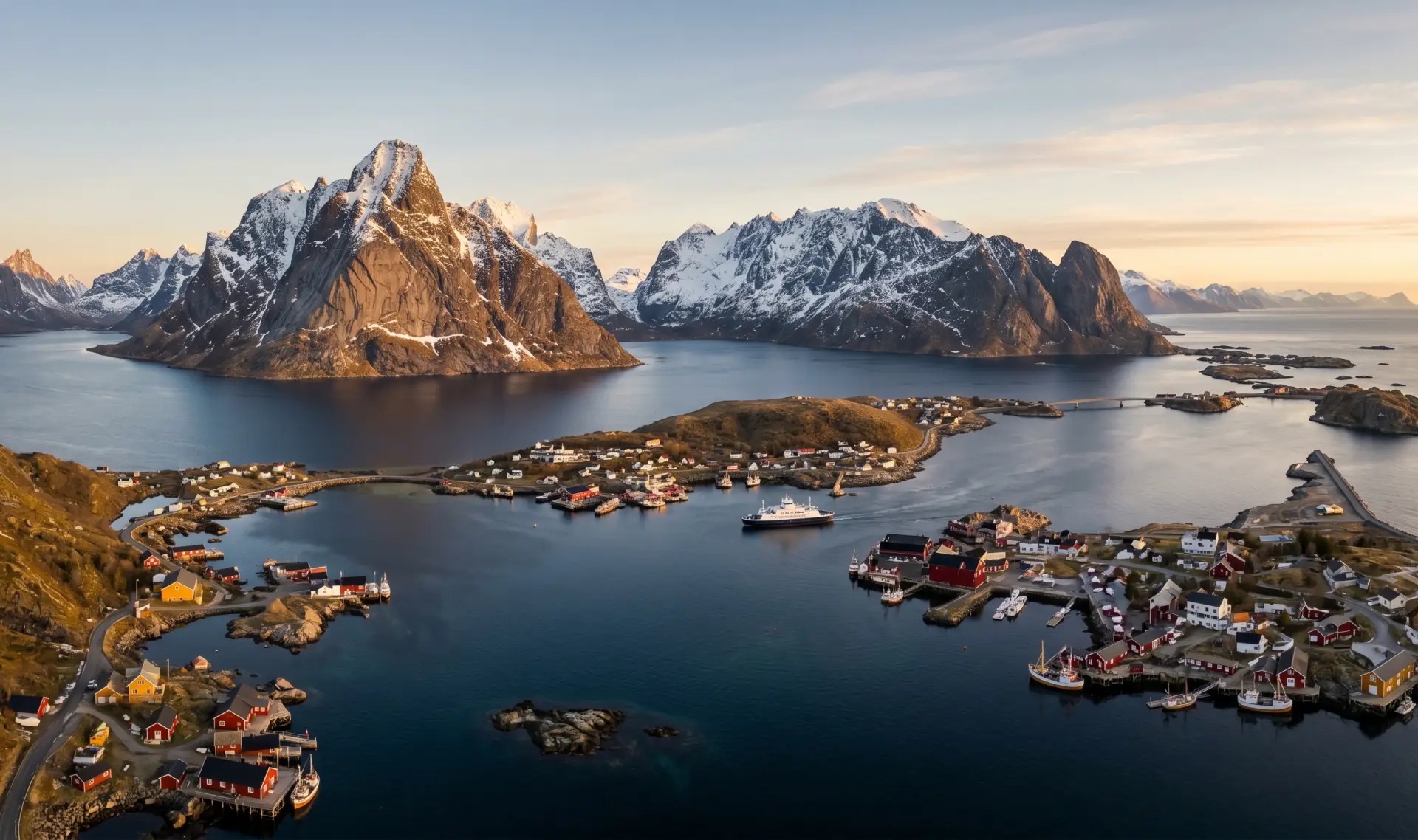
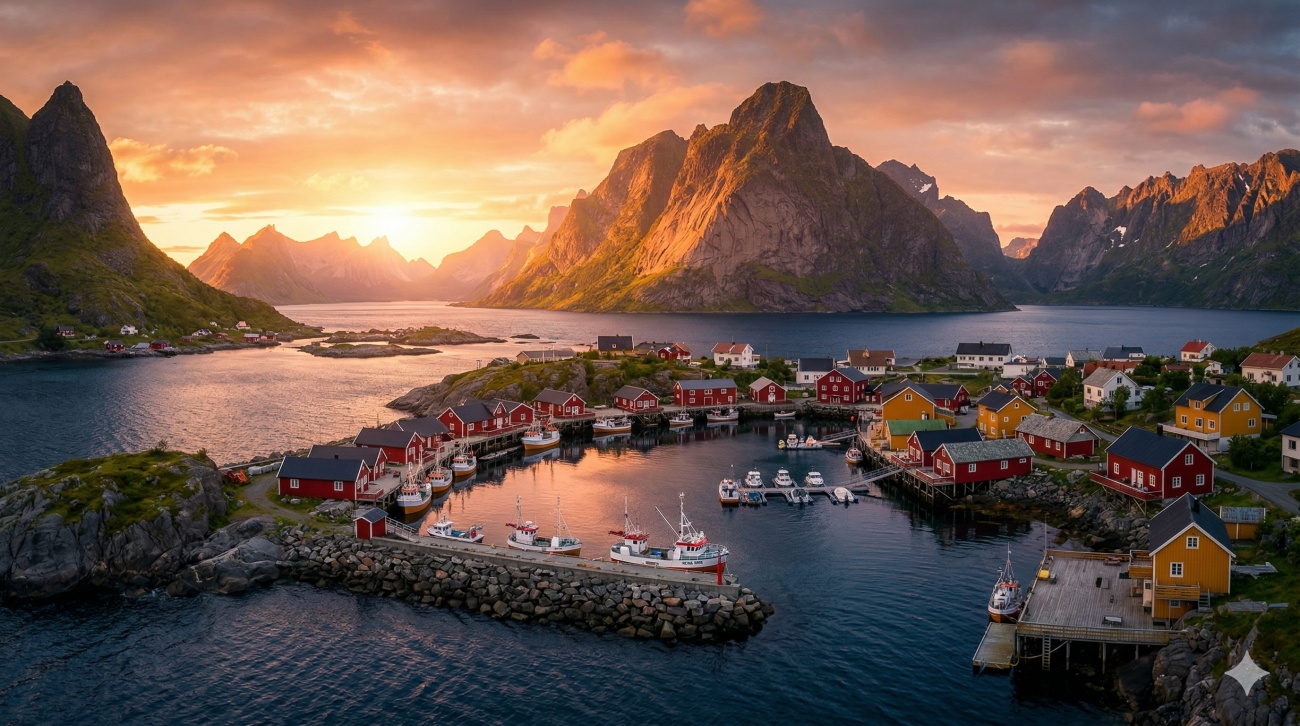
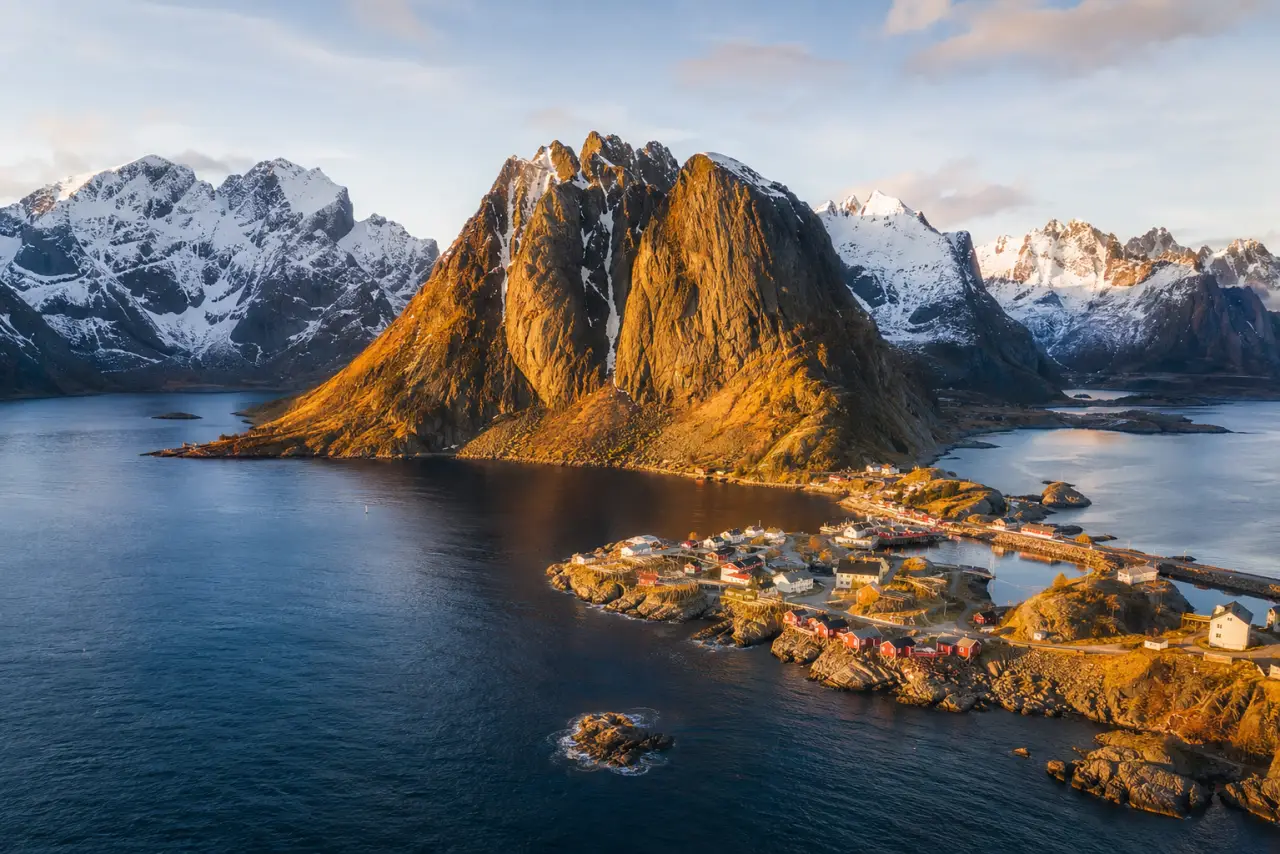
Lofoten is frequently described as the most photogenic place in Norway. That’s not hyperbole. The combination of mountains dropping directly into the sea, the traditional wooden rorbu cabins painted red and yellow, and the quality of Arctic light — low-angle, high contrast, constantly shifting — produces landscapes that look edited even when they’re not.
But the islands are more than a photography location. The fishing culture here is centuries old. Stockfish — cod dried on outdoor racks by the Arctic wind — has been produced in Lofoten since the Viking Age and still accounts for a significant part of the local economy. The small museums at Å and Kabelvåg tell that story better than any travel article can.
For first-time visitors to Norway, the Lofoten Islands answer a question that the fjord circuit doesn’t: what does it feel like to be somewhere genuinely remote, where the scale of the landscape makes you aware of your own smallness?
The practical answer to fitting Lofoten into a Norway trip: fly Oslo to Bodø or directly to Leknes or Svolvær, spend three to five days on the islands, then connect to Tromsø for northern lights (winter) or fly back south. It works as a standalone destination or as the northern end of a longer Norway itinerary. See what a private tour of Lofoten actually looks like →
Norway Travel Tips — The Practical Stuff
Norway is expensive by most international standards. Budget around €150–200 per person per day for accommodation, food, and transport outside of the major cities. In Lofoten, accommodation ranges from basic hostels to high-end rorbu rentals; booking well in advance is necessary for summer, ideally three to four months ahead.
Getting around Norway requires planning. Domestic flights are the fastest option for covering large distances — SAS, Norwegian, and Widerøe connect Oslo with Bodø, Leknes, Svolvær, and Tromsø. The ferry network is extensive and scenic but slow. Driving is possible but distances are longer than they appear on a map, and some mountain roads close in winter.
Language is not a barrier. English is spoken widely throughout Norway, including in small towns and rural areas. Most menus, signs, and transport information are available in English.
Norway uses the Norwegian Krone (NOK). Cards are accepted almost everywhere, including in small villages in Lofoten. Tipping is not expected but appreciated in restaurants.
Mobile coverage is generally good along main roads and in towns. In the more remote parts of Lofoten — the northwest coast, some mountain areas — coverage drops. Download offline maps before arriving.
Weather changes fast, especially in the north. A morning of sunshine can become an afternoon of horizontal rain in Lofoten. Pack waterproof layers regardless of the season.
Frequently Asked Questions About Visiting Norway
Is Norway worth visiting?
How many days do you need to visit Norway?
What is Norway most famous for?
Is Norway good for solo travellers?
What is the best region to visit in Norway?
Planning a trip north?
If your Norway trip is heading north, we’d be glad to show you Lofoten the way locals know it. Our private tours run year-round and are built around what you actually want to see.
Plan your Lofoten experience
See available tours
Northern lights tours